
Expert Reviewed Best Small Red Light Therapy Panels Buyers Guide
How to Choose the Right Small Red Light Therapy Panel for Targeted Treatment and Facial Therapy
Welcome to our comprehensive 2026 Small Red Light Therapy Panel buyers guide. Small red light therapy panels offer an excellent entry point into the world of photobiomodulation therapy, providing targeted therapeutic light for specific body areas without the investment required for full-body panels. Our review breaks down the specs and features of each red light therapy panel in a easy to understand comparison so you can find the best panel for you.
Quick Navigation
Key Attributes to Consider When Choosing a Small Red Light Therapy Panel
- Power Output (Total Watts): Higher total power means more light energy delivered to your tissue. Small panels range from 55W to over 116W. More power generally means faster treatment times and more effective therapy. Look for at least 80W+ for the best results.
- Power Density (W/cm2): This measures the total power of each LED, we calcualte this by taking the total number of LEDs and dividing the actualy power consumption between them. As you use a red light panel from 3-12 inches away the light intensity drops significantly at those distances. Don't confuse this with the LED rating itself (often 3W or 5W LEDs) which manufactures typically advertise!
- Irradiance at 6 Inches (mW/cm2): This indicates the manufacturers claimed light intensity that reaches your skin at a practical treatment distance. Often these numbers are used using measurement tools that can inflate the real irradiance by 2x, but is still a good comparison tool when comparing panels as this type of measurement is the industry standard.
- LED Configuration: Single-chip, dual-chip, or quad-chip LEDs affect how multiple wavelengths are delivered. More chips per LED can provide more even coverage of the different wavelengths, but the Power Density is now divided between those chips meaning lower irradiance at 6+ inches away. Single-chips provide stronger irradiance but less even coverage of the different wavelengths.
- Wavelengths: The best panels combine 660nm with 850nm near-infrared. Some panels also include 630nm red and 810nm/830nm NIR. Different wavelengths penetrate different depths into tissue which can provide better results. Adding additional wavelengths means less of the other wavelengths. Focus in which wavelengths are most important for you. The 600nm-800nm range is most researched backed wavelengths.
- Number of LEDs: More LEDs generally mean better coverage and more even light distribution. Small panels typically have 40-72 LEDs. Higher LED counts provide more uniform light distribution across the treatment area.
- Special Features: Adjustable brightness allows customization for sensitive skin or closer use. Pulsing modes may enhance certain therapeutic effects. COB (Chip on Board) lens technology concentrates light for focused therapy.
- Return Policy and Warranty: Since individual results vary, a good return period (30-60 days) lets you test the device. Warranties typically range from 1-5 years, with longer warranties indicating manufacturer confidence in product durability.
Important Note on Power Delivery: The power density and irradiance figures we list represent the LED output power of the LED itself. In practical application, when using a small panel at 6 inches distance, you typically receive between 3-4% of the power density due to the inverse square law of light. Single chip panels deliver closer to 4% while, multiple chip panels deliver closer to 3%. Panels will less LEDs will deliver slightly less irradiance where panels with more LEDs deliver more irradiance at 6". When comparing the specs of each product make sure to factor in these differences.
Quick Comparison - Top 4 Picks
Swipe to see more
| #1 Hooga Ultra 360 | #2 1Love Health RN60 | #3 Hooga Pro 300 | #4 Freyara COB Lens | |
|---|---|---|---|---|
| LED Count | 72 Quad-chip | 60 Single-chip | 60 Dual-chip | 20 + COB (64 LEDs) |
| Total Power | 116.4W | 91W | 112W | 105W |
| Power Density | 1.61 W/cm2 | 1.5 W/cm2 | 1.86 W/cm2 | 1.25 W/cm2 |
| Irradiance @6" | 132 mW/cm2 | 120 mW/cm2 | 109 mW/cm2 | 92 mW/cm2 |
| Red Wavelengths | 630nm, 660nm | 630nm, 660nm | 660nm | 660nm |
| NIR Wavelengths | 810nm, 850nm | 810nm, 830nm, 850nm | 850nm | 850nm |
| Other Features | Adjustable Brightness and Pulsing | 5 Wavelengths | Dual-chip LEDs | COB Concentrated Lens |
| Return Policy | 60 Days | 30 Days | 60 Days | 30 Days |
| Warranty | 3 Years | 5 Years | 3 Years | 1 Year |
| Price | Loading... |
Loading... |
Loading... |
Loading... |
| View Product | View Ultra 360 | View RN60 | View Pro 300 | View COB Lens |
Our Top 4 Picks - Best Small Red Light Therapy Panels 2026
#1
Hooga Ultra 360 Red Light Therapy Panel Review
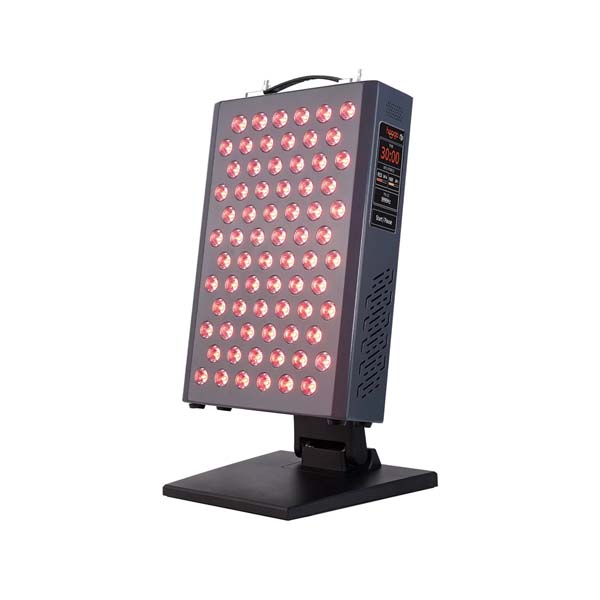
The Hooga Ultra 360 earns our top spot as the best small red light therapy panel overall. With an impressive 116.4 watts of total power and 132 mW/cm2 irradiance at 6 inches, this panel delivers the highest light intensity of any small panel we tested, making it ideal for users who want maximum therapeutic effectiveness in a compact form factor.
What truly sets the Ultra 360 apart is its quad-chip LED configuration featuring 72 LEDs. Each LED contains four chips delivering four different therapeutic wavelengths: 630nm and 660nm red light for surface-level benefits, plus 810nm and 850nm near-infrared for deep tissue penetration. This comprehensive wavelength coverage ensures you are getting both surface skin benefits and deep muscle/joint therapy in every session. The high LED count helps maintain a higher irradiance at 6 inches compared to standard 60 chip panels.
The Ultra 360 features adjustable brightness and pulsing modes, allowing you to customize your therapy experience. The pulsing function may enhance certain therapeutic effects compared to continuous wave light, with research suggesting different frequencies may benefit different conditions.
With a LED power density of 1.61 W/cm2, the Ultra 360 ranks among the most powerful small panels available. Hooga backs the Ultra 360 with a 60-day return period and a 3-year warranty.
Best For: Users seeking the highest light intensity and broadest wavelength coverage in a small panel, those who want adjustable brightness and pulsing modes for customized therapy.
Pros
- Highest irradiance: 132 mW/cm2 at 6 inches
- Highest total power: 116.4W
- Quad-chip LEDs with 4 wavelengths
- Adjustable brightness settings
- Pulsing mode
- 72 LEDs for excellent coverage
- 60-day return period
- 3-year warranty
Cons
- Premium price point
- May be too intense for sensitive users
View Hooga Ultra 360
Loading...
#2
1Love Health RN60 Red Light Therapy Panel Review
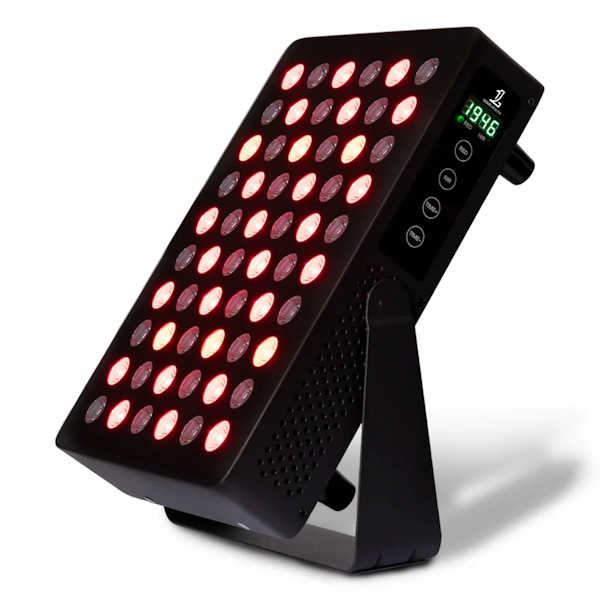
The 1Love Health RN60 takes our #2 spot with its impressive five-wavelength configuration and solid performance metrics. While its total power (91W) and irradiance (120 mW/cm2) are slightly lower than the Ultra 360, the RN60 compensates with the most comprehensive wavelength coverage of any panel in our comparison.
The RN60 features 60 single-chip LEDs delivering an unmatched combination of 6x 630nm LEDs and 24x 660nm LED red lights plus 3x 810nm LEDs, 3x 830nm LEDs, and 24x 850nm LEDs near-infrared lights. This five-wavelength approach covers the entire therapeutic spectrum from surface skin treatment to deep tissue penetration.
Where the RN60 truly shines is its industry-leading 5-year warranty—the longest of any panel we reviewed. Combined with a 30-day return period, this demonstrates 1Love Health's confidence in their product's durability and performance.
Best For: Users who want the most comprehensive wavelength coverage and those prioritizing long-term warranty protection.
Pros
- Five wavelengths for comprehensive therapy
- Strong irradiance: 120 mW/cm2
- Industry-leading 5-year warranty
- Solid build quality
- 60 LEDs for good coverage
Cons
- No adjustable brightness
- No pulsing mode
- Shorter 30-day return period
View 1Love Health RN60
Loading...
#3
Hooga Pro 300 Red Light Therapy Panel Review
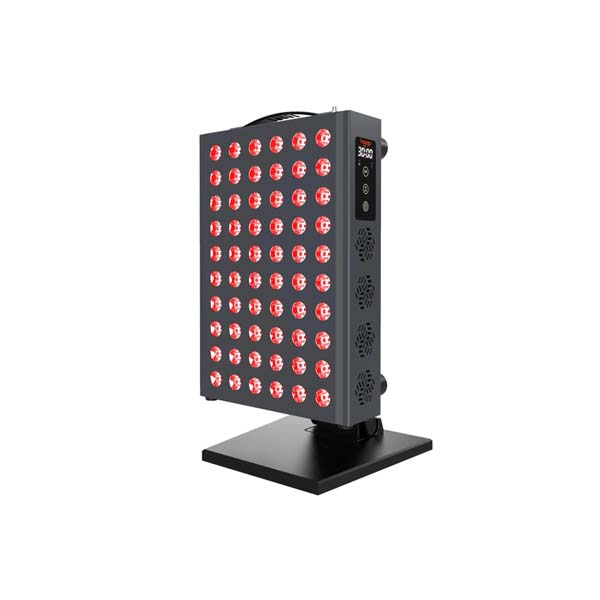
The Hooga Pro 300 secures our #3 ranking with an exceptional 112 watts of total power and the highest power density in our comparison at 1.86 W/cm2.
The Pro 300 features 60 dual-chip LEDs, with each LED containing both 660nm red and 850nm near-infrared chips. With 109 mW/cm2 irradiance at 6 inches, the Pro 300 delivers clinical-grade light intensity.
The Pro 300 shares the same quality construction as the Ultra 360, with a 60-day return period and 3-year warranty. The panel's design is straightforward and user-friendly, with simple on/off operation.
Best For: Users prioritizing maximum power density and dual-wavelength therapy with simple operation.
Pros
- Highest LED power density: 1.86 W/cm2
- Strong total power: 112W
- Dual-chip LEDs
- Excellent irradiance: 109 mW/cm2
- Simple operation
- 60-day return period
- 3-year warranty
Cons
- Only two wavelengths
- No adjustable features
View Hooga Pro 300
Loading...
#4
Freyara COB Lens Red Light Therapy Panel Review
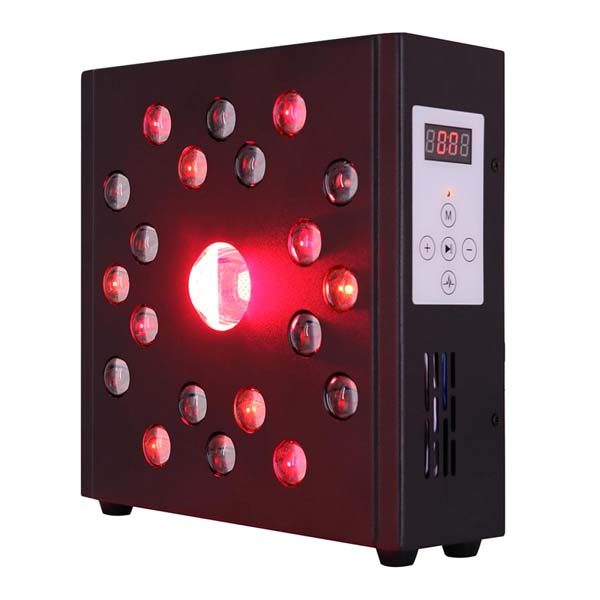
The Freyara COB Lens panel takes our #4 spot with its unique concentrated lens technology and solid 105 watts of total power. COB (Chip on Board) technology uses 20 primary COB modules that effectively contain 64 individual LEDs.
The Freyara COB panel delivers 660nm red light and 850nm near-infrared. With average 92 mW/cm2 irradiance at 6 inches, it provides clinical-grade light intensity. The COB lens design features 64 LEDs clustered together which concentrates light output for up to 50% higher irradiance focused therapy to specific treatment areas.
Freyara offers a 30-day return period and 1-year warranty on this panel.
Best For: Users wanting COB lens technology for concentrated light delivery.
Pros
- COB lens technology
- Solid 105W total power
- Clinical-grade irradiance: 92 mW/cm2
- Dual-wavelength coverage
Cons
- Lower power density (1.25 W/cm2)
- Only 1-year warranty
- 30-day return period
- Hong Kong based (returns)
View Freyara COB Lens
Loading...
Other Small Panels We Reviewed
Beyond our top 4 picks, we reviewed several other small red light therapy panels that may better suit specific needs or budgets.
Comparison Table: Other Small Panels
Swipe to see more
| Product | LEDs | Power | Power Density | Irradiance @6" | Wavelengths | Return/Warranty | Price | View |
|---|---|---|---|---|---|---|---|---|
| Hooga HG300 | 60 Single-chip | 80W | 1.33 W/cm2 | 73 mW/cm2 | 660/850nm | 60 Days / 3 Years | Loading... |
View |
| Freyara 300W 60LED | 60 Dual-chip | 89W | 1.48 W/cm2 | 106 mW/cm2 | 660/850nm | 30 Days / 1 Year | Loading... |
View |
| Hooga HG200 | 40 Single-chip | 55W | 1.375 W/cm2 | 90 mW/cm2 | 660/850nm | 60 Days / 3 Years | Loading... |
View |
Hooga HG300 Red Light Therapy Panel
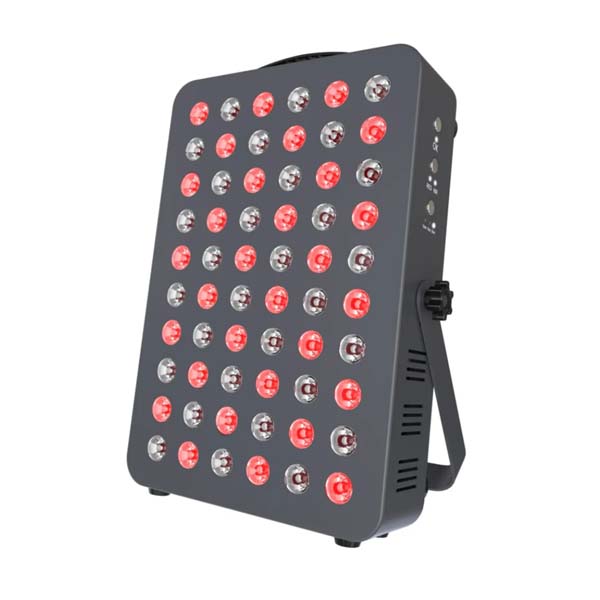
The Hooga HG300 is a solid entry-level option featuring 60 single-chip LEDs delivering 80W of total power. With 73 mW/cm2 irradiance at 6 inches, it provides adequate light intensity for basic photobiomodulation therapy.
This panel covers the essential 660nm red and 850nm near-infrared wavelengths. The HG300 is backed by Hooga's standard 60-day return period and 3-year warranty.
Pros
- Affordable entry-level option
- 60-day return period
- 3-year warranty
Cons
- Lower irradiance (73 mW/cm2)
- Only 2 wavelengths
- May require longer treatment times
View Hooga HG300
Loading...
Freyara 300W 60LED Red Light Therapy Panel
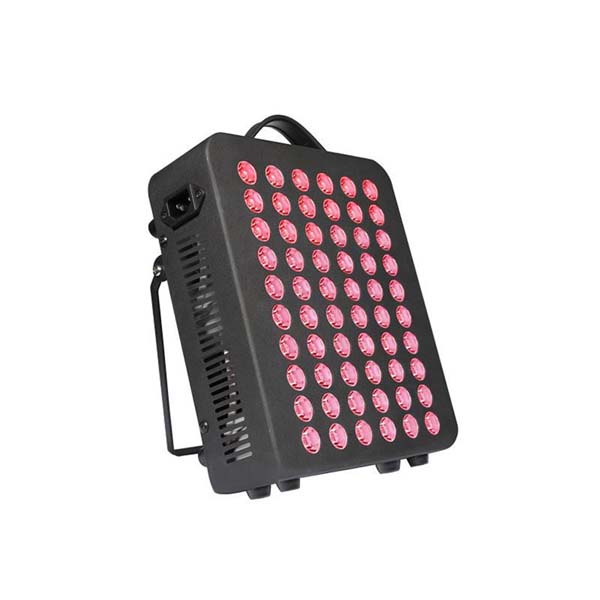
The Freyara 300W 60LED panel features 60 dual-chip LEDs with 89W total power and an impressive 106 mW/cm2 irradiance at 6 inches.
The panel delivers 660nm red and 850nm near-infrared wavelengths through its dual-chip LED configuration. The power density of 1.48 W/cm2 is quite good.
Pros
- Strong irradiance: 106 mW/cm2
- Dual-chip LED technology
- Good power density: 1.48 W/cm2
Cons
- Shorter 1-year warranty
- 30-day return period
- Hong Kong based (returns)
View Freyara 300W 60LED
Loading...
Hooga HG200 Red Light Therapy Panel
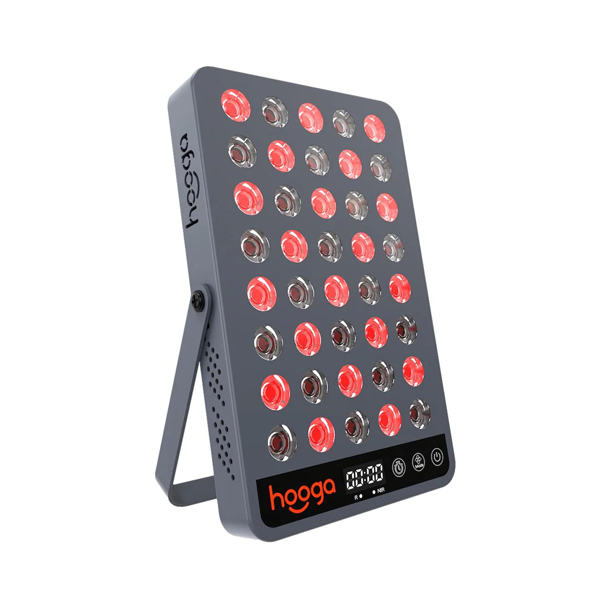
The Hooga HG200 is the most compact and affordable option in our comparison, featuring 40 single-chip LEDs with 55W total power. With 90 mW/cm2 irradiance at 6 inches, it sits right at the threshold of clinical-grade intensity.
The HG200 is ideal for users who want to try red light therapy with minimal investment. It carries the same 60-day return period and 3-year warranty as other Hooga products.
Pros
- Most affordable option
- Compact portable design
- 60-day return period
- 3-year warranty
Cons
- Lowest total power (55W)
- Fewest LEDs (40)
- Small area of coverage
View Hooga HG200
Loading...
Why Choose a Small Red Light Therapy Panel?
Small red light therapy panels have become increasingly popular for good reason. These compact devices offer unique advantages that make them an ideal choice for many users:
Perfect Entry Point Into Red Light Therapy
If you are new to red light therapy, a small panel is the perfect way to start. Unlike full-body panels that require significant investment and dedicated space, small panels offer an affordable entry point to experience the benefits of photobiomodulation. You can test whether red light therapy works for your specific needs before committing to a larger system.
Versatile and Multi-Purpose
Small panels are incredibly versatile. Their compact size means you can easily move them between rooms, take them when traveling, or store them when not in use. They can be positioned on a table, mounted on a wall, or even held by a partner for hard-to-reach areas. This flexibility makes them suitable for various living situations, from small apartments to large homes.
Ideal for Facial Therapy
One of the most popular uses for small red light panels is facial therapy. The compact size is perfect for positioning in front of your face while sitting at a desk, watching TV, or relaxing. Regular facial treatments can help stimulate collagen production, reduce fine lines and wrinkles, improve skin tone, and accelerate healing of blemishes. The 660nm red light is particularly effective for surface-level skin concerns.
Targeted Treatment for Specific Areas
Whether you have knee pain, shoulder discomfort, neck tension, or wrist issues from computer work, small panels excel at targeting specific problem areas. You can position the panel directly over the affected area for concentrated therapy. This targeted approach often produces faster results than full-body treatment for localized issues.
Space-Saving Design
For those with limited space, small panels are a game-changer. They can be stored in a closet, under a bed, or on a shelf when not in use. Unlike large panels that require dedicated floor space, small panels integrate seamlessly into your existing environment.
Cost-Effective Solution
Small panels typically cost significantly less than full-body systems while still delivering therapeutic-grade light intensity. This makes advanced photobiomodulation therapy accessible to more people. You get professional-quality light therapy at a fraction of the cost of clinical treatments or full-size panels.
The Two Primary Wavelengths
All quality small panels include both essential therapeutic wavelengths:
- 660nm Red Light (Visible): This wavelength is excellent for surface-level concerns like skin health, collagen production, and shallow tissue healing. It is visible as deep red light and is well-absorbed by skin cells. Ideal for facial treatments, wound healing, and surface skin conditions.
- 850nm Near-Infrared (Invisible): This wavelength penetrates much deeper into the body, reaching muscles, joints, bones, and even internal organs. It is invisible to the human eye but produces a gentle warming sensation and is ideal for deeper tissue therapy, pain relief, and muscle recovery.
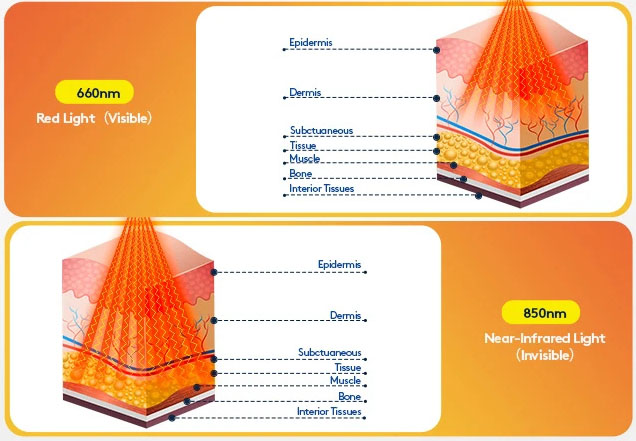
660nm penetrates surface tissue while 850nm reaches deeper
Pain Relief and Inflammation Reduction
Multiple studies have demonstrated that red and near-infrared light therapy can significantly reduce chronic pain and inflammation. The light energy helps reduce oxidative stress in cells and modulates inflammatory cytokines. Research published in the Lasers in Medical Science journal found that photobiomodulation therapy effectively reduces pain and improves function in chronic joint disorders.
Enhanced Muscle Recovery and Performance
Athletes and fitness enthusiasts use red light therapy to speed up muscle recovery after intense workouts. Studies have shown that near-infrared light therapy significantly reduces muscle fatigue and improves recovery time after exercise-induced muscle damage by enhancing cellular energy production.
Improved Skin Health and Anti-Aging
Red light at 660nm has been shown to stimulate collagen production, reduce wrinkles, improve skin tone, and accelerate wound healing. Research in Photomedicine and Laser Surgery demonstrated that red light therapy improved skin complexion and increased collagen density.
Increased Cellular Energy (ATP Production)
By stimulating mitochondrial ATP production through cytochrome c oxidase activation, red light therapy enhances overall cellular energy. This improved cellular function supports healing, reduces inflammation, and promotes overall wellness.
Frequently Asked Questions About Small Red Light Therapy Panels
How does red light therapy work at the cellular level?
Red light therapy works through photobiomodulation—light is absorbed by cytochrome c oxidase in mitochondria, stimulating ATP production. This increases cellular energy, promotes healing, and reduces inflammation.
How long should I use a small red light therapy panel per session?
Most manufacturers recommend 10-20 minutes per treatment area. For general wellness, 10-15 minutes daily is sufficient. Higher power panels may require shorter sessions than lower-power panels.
What is the difference between 660nm red light and 850nm near-infrared?
660nm red light is visible and affects surface tissues (skin, shallow muscles), excellent for collagen production. 850nm near-infrared is invisible but penetrates much deeper into muscles, joints, and organs.
How far should I position the panel from my skin?
We recommend positioning small panels 6-12 inches from the treatment area. At 6 inches, you will receive the irradiance levels we list. Closer is generally more effective for targeted therapy.
Is higher power density always better?
Not necessarily. Very high intensities are excellent for pain relief, while lower intensities may be sufficient for skin health and are gentler for sensitive users.
Can I use red light therapy with other treatments?
Yes, red light therapy pairs well with physical therapy, massage, and exercise recovery. Consult your healthcare provider if you are photosensitive or pregnant.
Do I need eye protection?
While red light is generally safe for eyes at therapeutic intensities, we recommend not staring directly at the LEDs. For facial treatments, close your eyes or use provided eye protection.
What is the difference between single-chip, dual-chip, and quad-chip LEDs?
Single-chip LEDs contain one chip per diode. Dual-chip LEDs contain two chips (660nm + 850nm). Quad-chip LEDs contain four chips for additional wavelengths. More chips mean broader wavelength coverage.
How soon will I see results?
Some users report immediate warmth and relaxation. Pain relief may be noticeable within days to weeks. Skin improvements typically take 4-12 weeks of consistent use.
Are there any side effects?
Red light therapy is very safe. Some users may experience temporary redness or warmth. Avoid using on areas with active cancer and consult a healthcare provider if taking photosensitizing medications.
Should I choose a small panel or a full-body panel?
Small panels are ideal for targeted treatment of specific areas like the face, neck, joints, or localized pain points. Full-body panels are better for overall wellness and treating large areas simultaneously.
Selected Scientific Studies on Red Light Therapy
Journal of Biophotonics, 2016
Review showing photobiomodulation improves muscle performance and accelerates recovery through enhanced mitochondrial function.
European Journal of Physical and Rehabilitation Medicine, 2017
Systematic review demonstrating photobiomodulation reduces pain and improves function in chronic pain conditions.
AIMS Biophysics, 2017
Comprehensive review of how red and near-infrared light reduces inflammation at the cellular level through multiple pathways.
Photodermatology, Photoimmunology & Photomedicine, 2013
Review demonstrating red light therapy's effectiveness for collagen production, wrinkle reduction, and skin rejuvenation.
Journal of Neuroscience Research, 2018
Research showing near-infrared light's ability to penetrate the skull and provide neuroprotective benefits.
Lasers in Medical Science, 2014
Study demonstrating accelerated muscle recovery and reduced oxidative stress after exercise with red light therapy.
Ready to Choose Your Small Red Light Therapy Panel?
All panels are available through IIT Health Store. Consider your needs: maximum power and features (Ultra 360), comprehensive wavelengths and warranty (RN60), highest power density (Pro 300), or COB lens technology (Freyara). Our top recommendation for most users is the Hooga Ultra 360 for its combination of power, features, and wavelength coverage.
Disclosure: We may earn a commission on purchases made through affiliate links. This helps support our independent testing and reviews. All testing was conducted independently with no manufacturer influence.